
The places in between
Overland travel as adventure

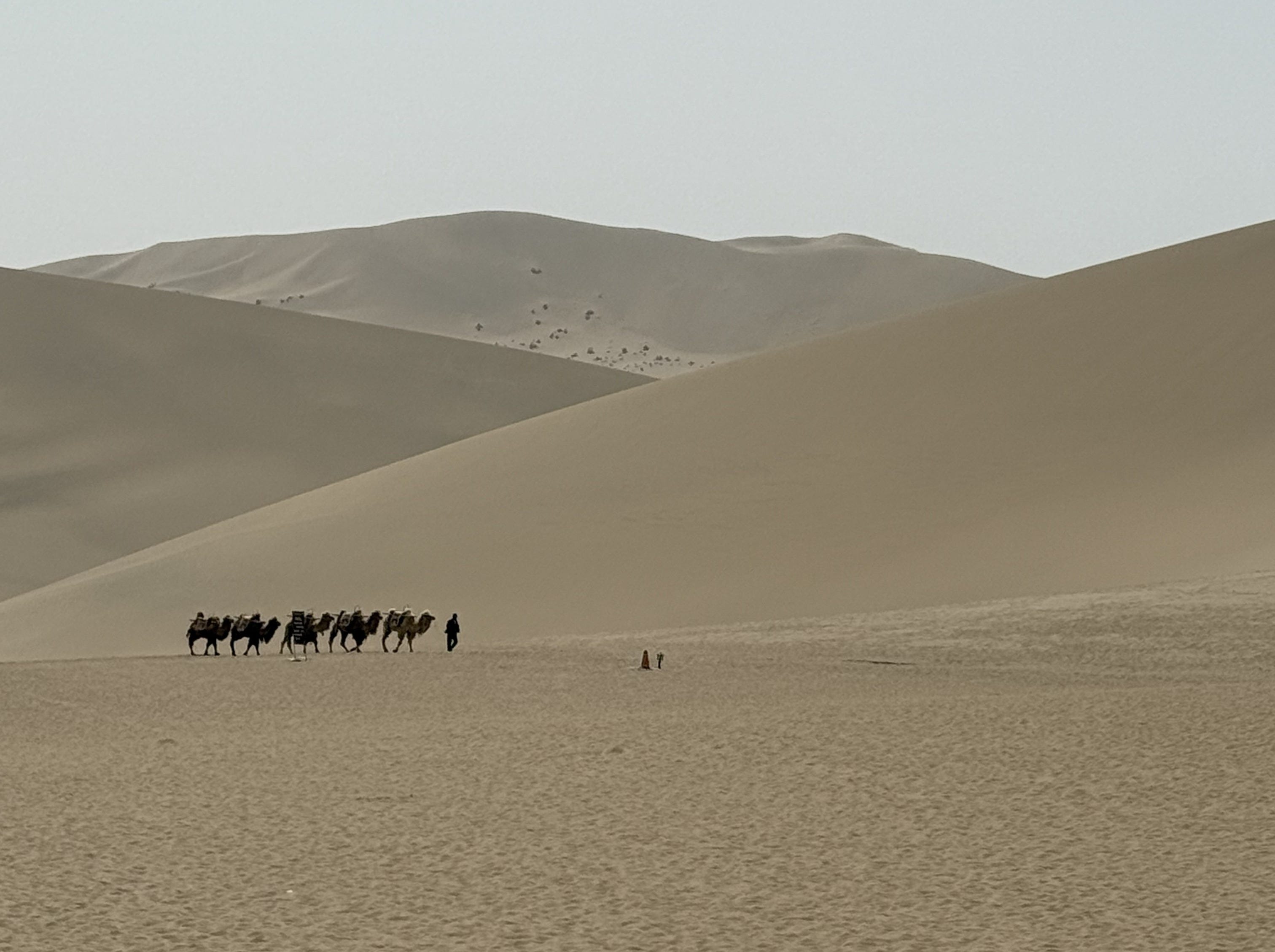
In a globalised world, overland travel feels more real than simply hopping on a plane. The places in between are often where you gain the clearest understanding of a country and its culture. Flying drops you straight into major cities and airports, but travelling by land forces you to experience the gradual transitions that shape a place — the landscapes, accents, food, architecture, and people that shift almost imperceptibly across regions and borders.
A video popped up on my Instagram feed recently. The captions read: “This is not Greece. This is not Iceland. This is not France. This is not Australia.” Clips of castles, white beaches, turquoise water, and jagged mountains flashed by. Written on the final frame was “This is England.”
One of my housemates, who is from South Africa, commented on how beautiful the English countryside looked. I told them that in many parts of rural Britain and Ireland, on top of the beautiful landscapes, that the food feels fresher, the pubs are better, and the people friendlier. It feels like a more authentic experience than simply visiting London or another major city. Cities can feel strangely detached from the countries around them — shaped more by globalisation than by local identity.
I found myself talking about the area where I grew up in Oxfordshire, and how southern England becomes a dreamscape in spring and summer. People swim in rivers, ponds, and lakes lined with willows and reeds. Blackbirds, wrens, robins, and wood pigeons create a constant chorus. These are experiences most tourists will never know, because they fly in and out of London, Manchester, or Edinburgh and only see a narrow slice of British culture.
That conversation reminded me of my own journeys across the Eurasian continent — and how overland travel reveals parts of countries that flying simply cannot. Airports make everywhere feel oddly similar: the same duty‑free shops, the same coffee chains, the same international beers, the same polished terminals detached from the realities outside. Travelling by land removes that layer of insulation. Instead of teleporting between capitals, you feel yourself moving between worlds.
I still love the sensation of stepping off a plane into the heat and humidity of a new country — especially coming from England — but overland travel offers a different appreciation of geography and climate. You feel weather change gradually. Dry plains become mountains, mountains become fertile valleys, and tropical humidity slowly gives way to desert heat.
China made this especially clear. As I travelled from Guangzhou, where rice dominates the cuisine, into the Sichuan Basin, where spice is used to battle heat and humidity, and then further north and west into harsher, drier mountain climates where wheat and meat become staples, I saw how geography shapes food. In earlier blogs I wrote about how mountains, rivers, and plains shaped Chinese statecraft and regional identity. Food reflects this too. You only truly appreciate these transitions when you travel slowly enough to watch rice dishes fade into wheat noodles, or spice levels shift as climate and agriculture change from one province to the next.
Overland travel turns the journey itself into part of the destination. Watching landscapes evolve across countries gives you a far more authentic understanding of a region. Geography begins to explain culture. You understand why certain languages survived in isolated mountain valleys, why food differs dramatically between neighbouring provinces, or why ethnic groups spread across modern borders. Travelling slowly lets you see how geography shapes identity.
It also restores the physicality of distance. It reminds you how vast countries really are, and how difficult travel once was before modern transport networks existed. In Afghanistan, for example, the harsh landscape immediately made it obvious why so many empires struggled there for centuries. The mountains, distances, and unforgiving terrain explain history far better than any book ever could.
Overland travel also romanticises the historic journeys so many of us have read about. As I travelled west from Xi’an through western China and down into Kabul via Central Asia, I began to understand what travellers like Marco Polo must have experienced centuries ago. The local customs, food, landscapes, and endless distances created a sense of continuity with older trade routes and migrations across Eurasia. From Samarkand to Khiva, Bukhara, and finally Kabul, wandering through bazaars filled with carpets, dried fruits, trinkets, and silks, I imagined the Russian and British agents of the Great Game, and the nomadic tribes who once looted caravans along these same routes.
Borders, too, take on new meaning when crossed by land. You begin to notice why they formed where they did — along rivers, mountains, deserts, or ethnic fault lines — and why some cultures ignore them entirely. Food, language, and traditions rarely stop neatly at checkpoints. They blend, overlap, and spill across regions in ways that modern maps fail to capture.
When you arrive somewhere overland, the destination feels earned. A city doesn’t suddenly appear out of nowhere as it does from an airport transfer. It accumulates. First it appears on a distant road sign. The kilometres slowly count down. Villages become suburbs, traffic thickens, and the atmosphere shifts long before you reach the centre.
I remember approaching Istanbul at sunrise. Quiet rolling hills gradually transformed into dense suburbs, crowded roads, and minarets rising above it all. The city revealed itself piece by piece. Arriving felt less like checking into a destination and more like crossing a finish line.
More than anything, though, it’s the people you meet along the way that make overland travel special. In the in‑between places, you meet people whose lives are still deeply rooted in local traditions rather than international tourism. Communication becomes less about language and more about trust, gestures, and shared humanity.
When I crossed into Uzbekistan — after hitching a ten‑hour ride with locals from Bishkek — I was swarmed by Uzbeks, some staring, others shouting place names, hoping for business. Westerners rarely cross at that border; it didn’t even appear on maps when I checked. The guards seemed shocked but welcoming. A taxi driver asked if his sister and her husband could join us so they could practise their English. They invited me to stay longer in Namangan for a flower festival happening that weekend.
As a traveller, you learn what it feels like to communicate without relying on English. You point at dishes you can’t pronounce, hope the bus is heading to the right town, and trust that the person serving you understood what you meant. Those moments of uncertainty create far more memorable experiences than anything carefully planned. Overland travel forces you to engage with the world rather than simply consume it.