
'Mao'ch ado about nothing
Beijing, Datong, Pingyao

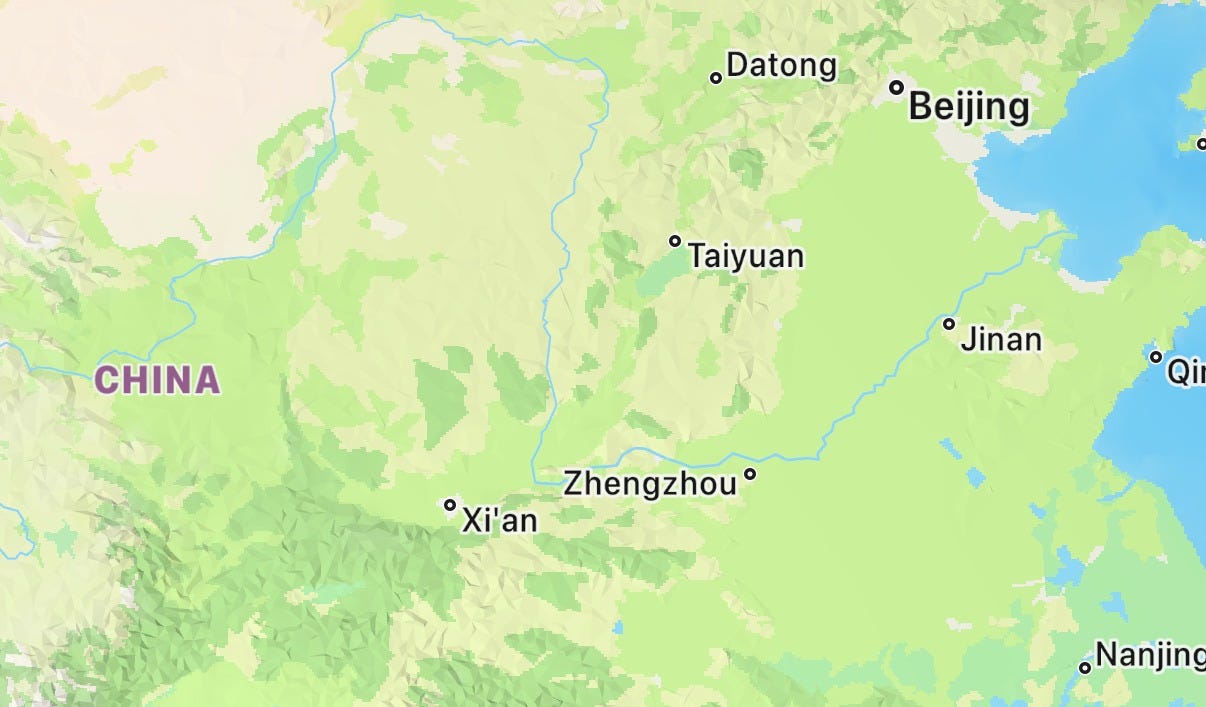
(15 April 2025) Beijing: It was late when arrived. The station seemed less busy than expected, as did the streets. I was glad to be out of the humid air of southern China. My hostel was in the middle of a historic Hutong. Hutongs are small communities within Beijing. They are comprised of narrow laneways interwoven between a patchwork of single story courtyards. Post check in, and after 8 hours on a train, I went on the hunt for dinner. My faithfulness to dumplings continued. Once finished I headed back to my hostel, picking up a few moon cakes on the way back. The hostel was quiet. More westerners strutted the halls but still no one seemed keen to socialise. At least there wasn’t a stale smell of cigarettes this time.
(16 April 2025) Beijing: It was still dark when I woke up. Since being in China it had been hard to socialise. I signed up to a group tour of the Great Wall and Ming dynasty tombs to remedy this. However, there were only 3 of us on the tour all together. An American mother and son duo made up the other two. She was born in southern China but spent most of her life in The US. ‘This is my son Brayden’ he was a typically grumpy teenager. He grunted at me without eye contact, as if to say hello. His head rested on his arm which subsequently rested against the window ledge. They looked characteristically Chinese, but spoke with a whiny Californian twang.
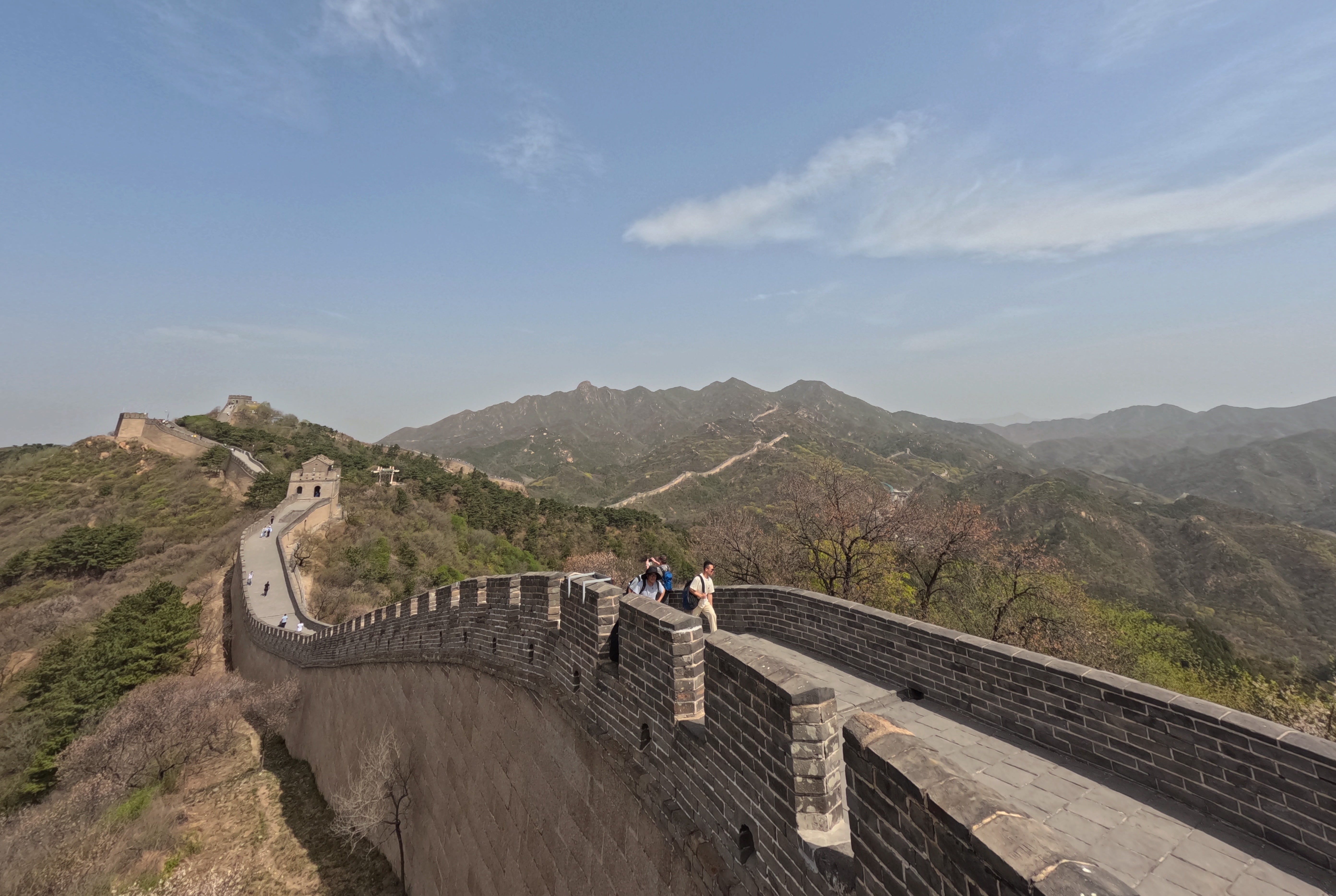
Glimpses of the Great wall could be seen once we escaped the city. The wall traced every peak and trough of the hills, like the spine of a snake. ‘The Chinese government takes foreign am..am’ ‘Ambassadors?’ interrupted the American ‘Ambassadors! Up to this part of the wall’ the tour guide continued. A modern lift took us up to the one of the higher parts of wall. At the peak I could see the wall vanish off over the horizon, slithering its way along the undulating crestlines. Pine forests covered the surrounding hills. In the distance, at a lower part of the wall, hoards of tourists formed a human puddle. The sun was high in the sky. A gentle breeze neutralised the dry heat. We left after an hour, adhering to a strict itinerary.
We pulled into a jade factory. ‘This is your tour guide. She will take you around the museum’ we were ushered towards a woman in a black suit. A wire coiled from her earpiece into her inside jacket pocket. There were three jade workers behind a wall of glass as you walked in. Tourists were pressed up against window and took photos like they were animals in a zoo. The tour guide was robotic and emotionless during the tour. Price tags dangled suspiciously on the ‘artifacts’. I turned around to realise the museum was bloated with westerners. Then it clicked. This wasn’t a museum. It was a shop. It was a trap! I tuned back into the tour just as the words ‘We can give you good price on this one’ came out of the tour guides mouth. ‘What do you think Brayden?…You could get one of those spheres for your brother’ ‘We’ll keep on lookin’ She ushered Brayden towards some jade jewellery. The tour guides were on the far side of the room, laughing and drinking complementary tea. In order to get there I had to navigate the minefield of saleswomen. ‘Hello, you want pretty earing for your girlfriend? Maybe nice jade necklace? Look real jade, high quality’. The main reason for the stop was because of lunch. ‘You use chopsticks very well’ ‘Thanks’ the mother then looked disappointingly at Brayden using a knife and fork. It was becoming more obvious that the trip was to get him to explore his Chinese roots a bit more.
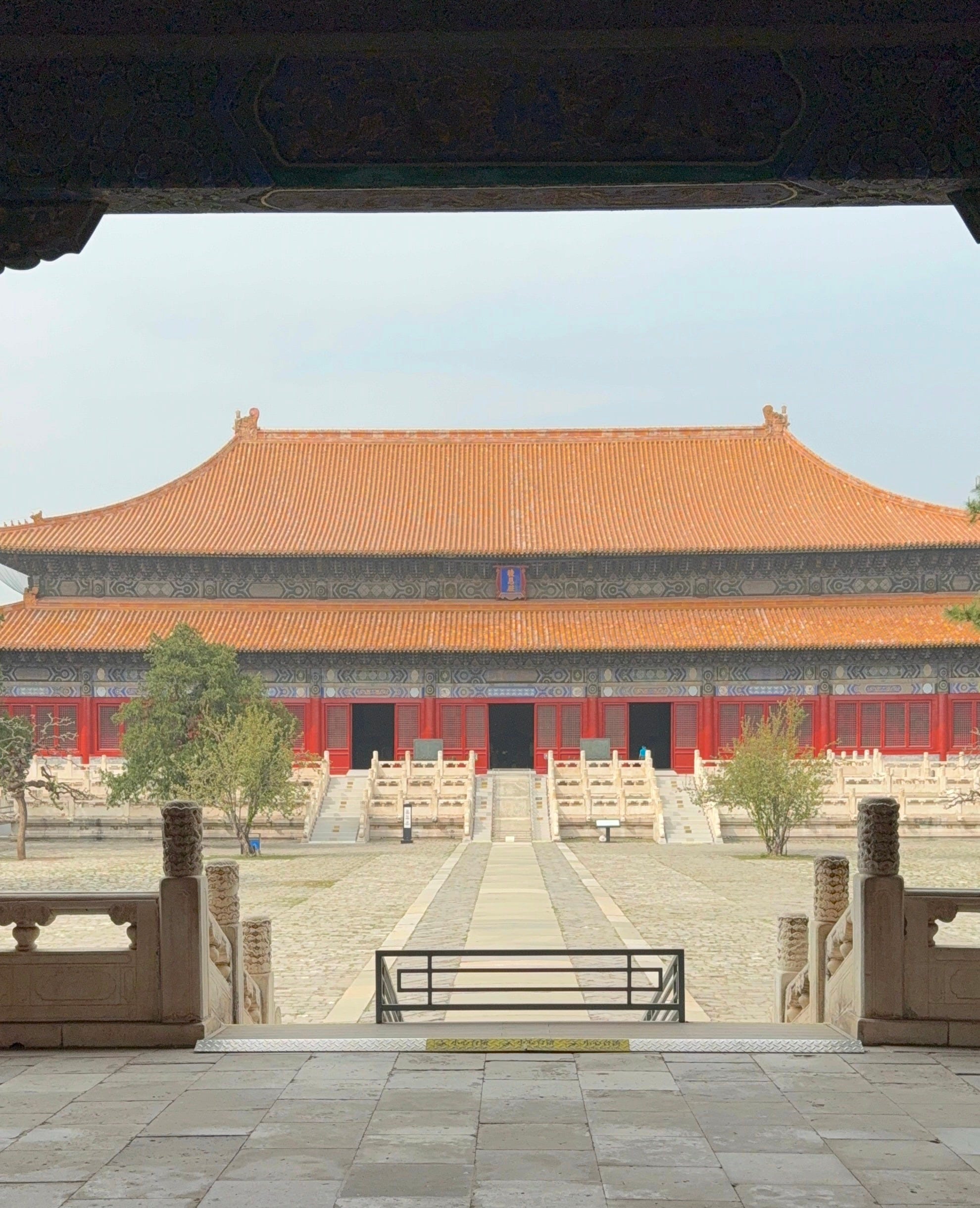
Thirteen Ming dynasty tombs are clustered on the outskirts of Beijing. There is also one tomb in Nanjing, the original capital. After lunch we visited Changling tomb, one of the best preserved tombs. We arrived at an elaborate palatial looking complex. The hall of Eminent Favours. White stone steps led up to a timber structure. A typically orange sloped roof capped the building. At the back of the mausoleum there unkempt mound. A small forest grew out of it. Wild flowers covered the forest floor. ‘The emperor is buried beneath the mound’ The tour guide mentioned it was in keeping with Feng Shui.
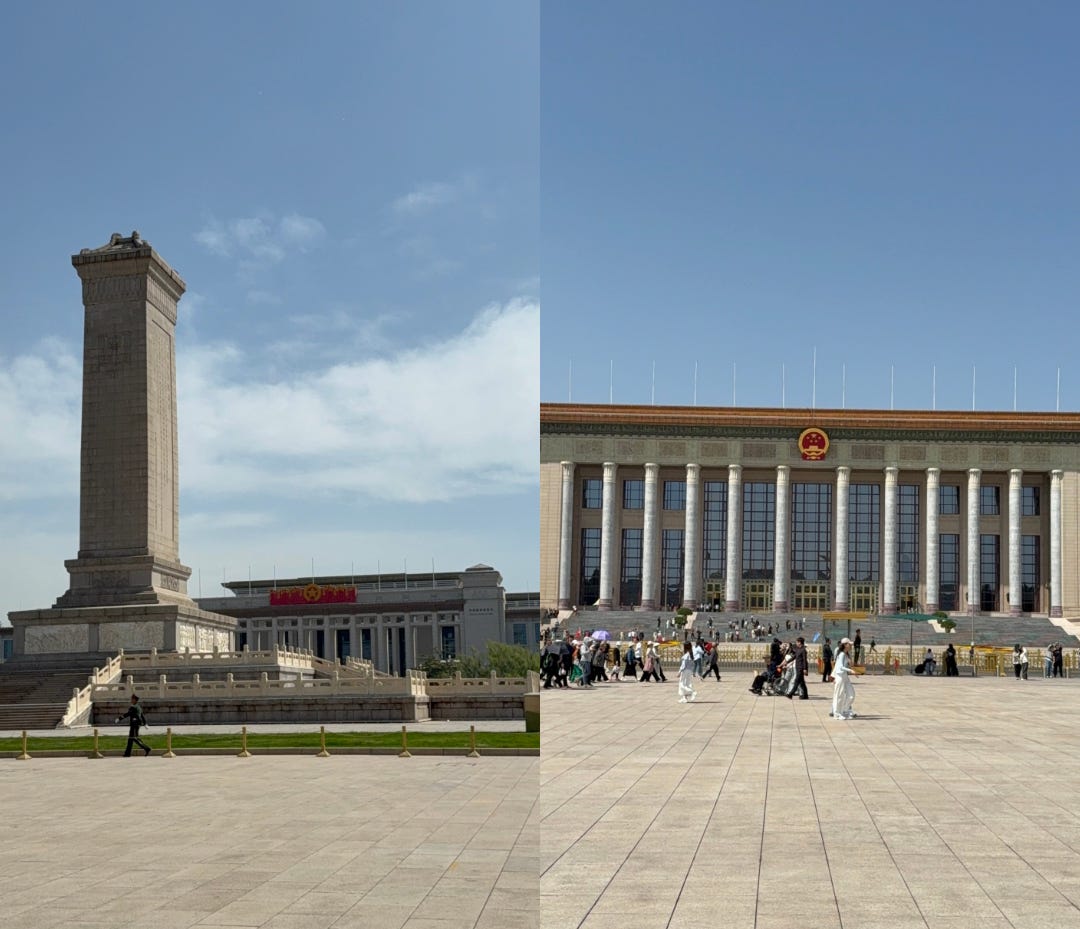
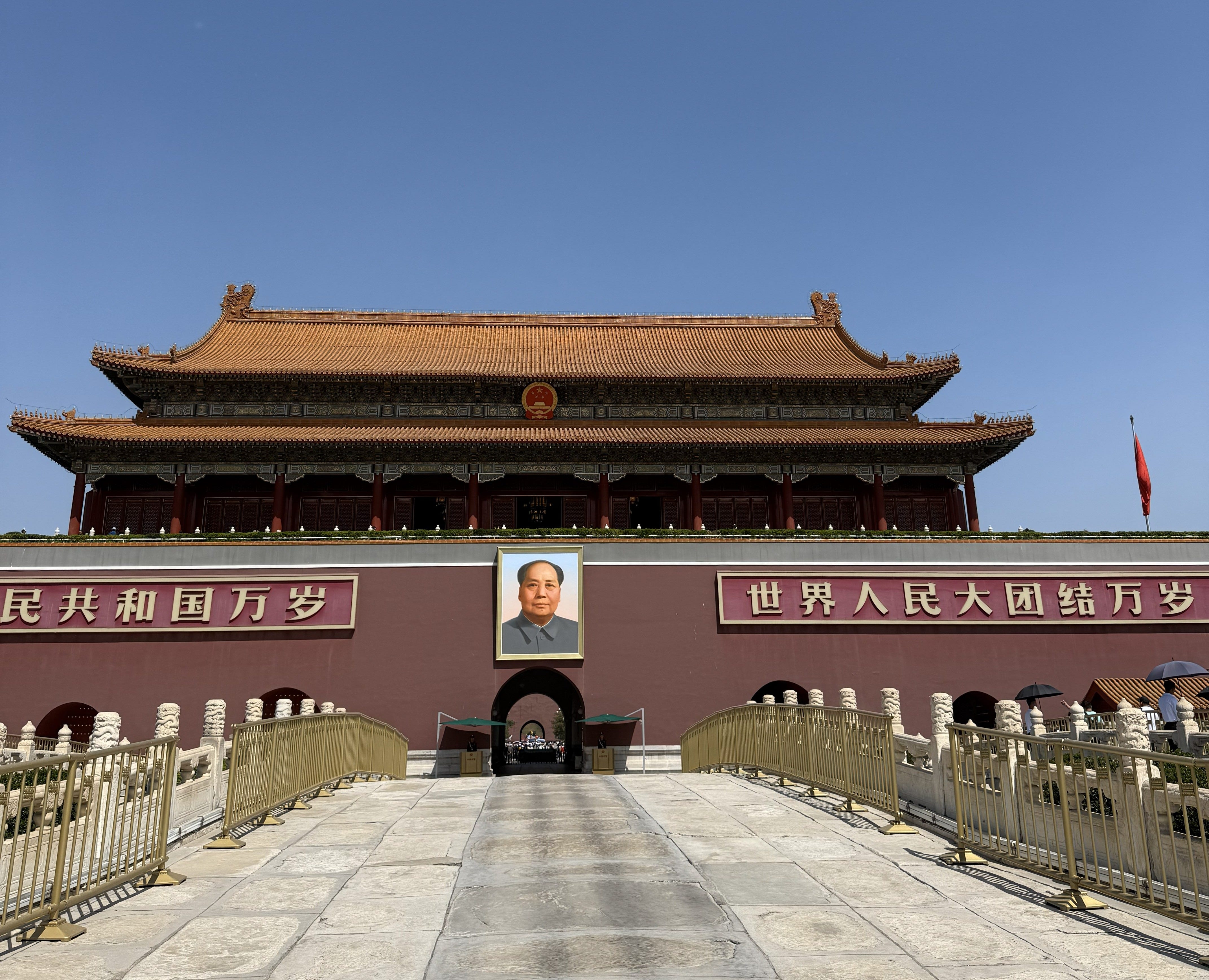
(17 April 2025) Beijing: Luck was on my side. Tickets for Tiananmen square and the Forbidden city are hard to come by. Especially last minute. Thankfully I was able to book onto a tour. There was strict security to enter. Police blockades surrounded the premise. Heat from the sun shimmered across the square. It was already close the 30 degrees yet it was still morning. The tour brought up historic protests that had taken place in the square, acknowledging that we know about 1989 but that he cant talk about it. We entered near the mausoleum of Mao Zedong. A large obelisk, called The Monument of The Peoples Heroes, stood in the middle. To the west was the National Museum of China and to the east was The Great Hall of The People, where the Chinese government convenes. Both are built in a modernist cross Stalinist style, regal yet brutalist in look. At the far end was the Tiananmen itself. The entrance to the forbidden city. It was a red barbican gate with classical Chinese architecture centred on top. A portrait of Mao Zedong hung above the entrance. ‘The gate of heavenly peace’ was written in Chinese characters either side of Mao Zedong’s portrait. It was the doorway between worlds. Between rich and poor.
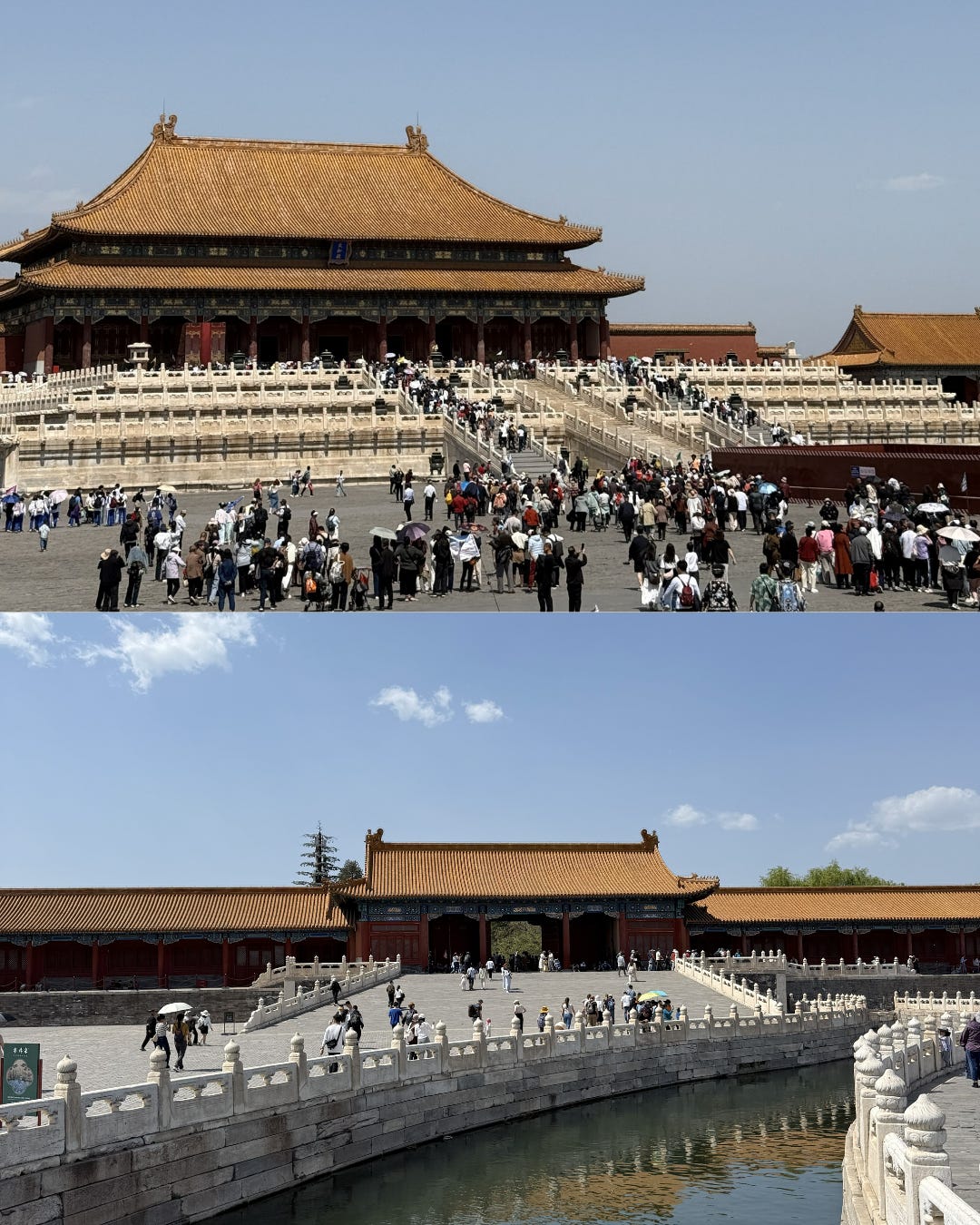
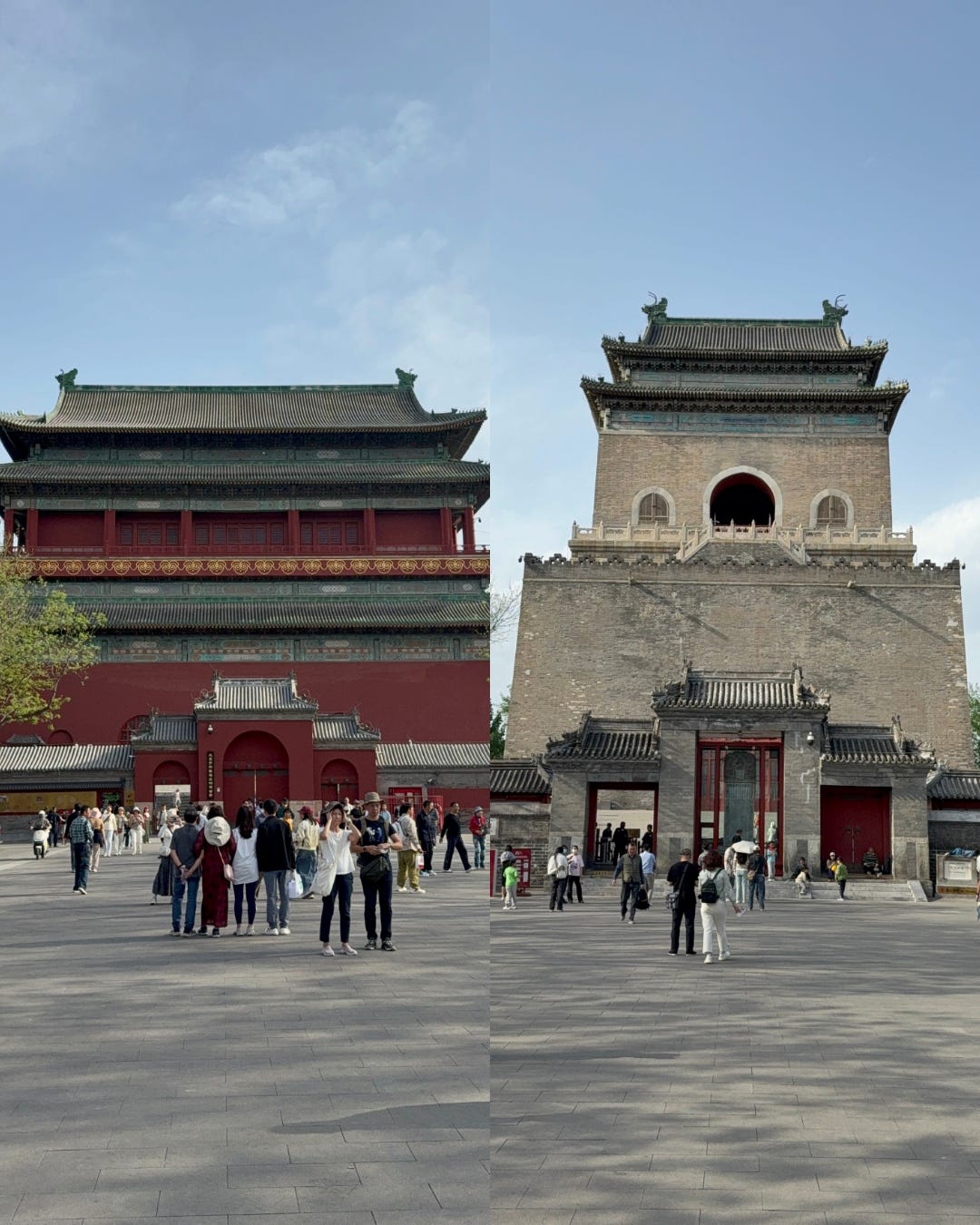
A few volunteers took our passports in order to collect our tickets. In China, your passport is your ticket everywhere. We queued up for yet more security checks, eventually passing through. Packs of tourist groups followed flags around like loyal dogs. A canal carved its way through the first courtyard. Orange sloped roofs opposed the white stone of the square. We kept moving from courtyard to courtyard hearing tales of Emperors and their concubines. Towards the back of the complex, the buildings started to look older, and the courtyards became smaller. At the very back was a large garden. The overgrown plants made the area feel small and cramped, as did the people. A customary round of applause followed the tour guide detailing about tips. I opted to walk back to the hostel despite the heat, stopping at old Bell and Drum towers en route.
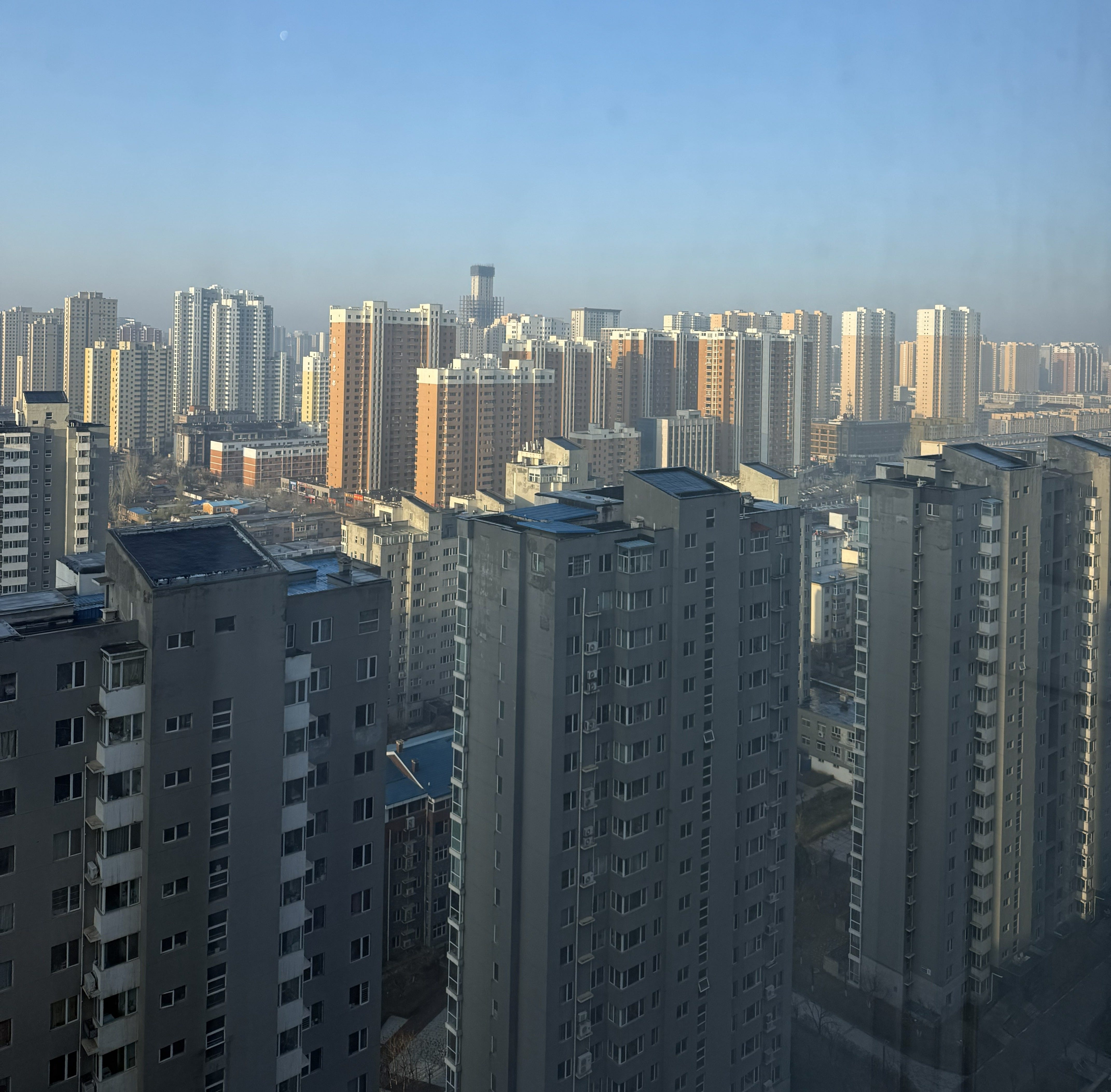
(18 April 2025) Datong: A fleet of highspeed trains were lined up along the platforms. I was headed for the city of Datong. My homestay was at the top of a brutalist apartment block. ‘You are the only guest tonight so I have upgraded your room to a private one’. The host was friendly and spoke perfect English. ‘This is one of the driest regions of China’ He said as heavy rains pelted the ground. ‘Datong is only a small city. Around 4 million people’. ‘That would make it the third biggest in the UK’ I laughed. A pristine electric car delivered me to my destination. A thirty minute drive out of Datong were the Yungang Grottoes. Famed for ancient Chinese Buddhist cave art.
I hurried along an almost flooded pathway. To my right were sandstone cliffs. Holes had been carved out of the cliff face to represent windows and doors. I ducked into a small opening to dry off. A large buddha was ornately carved into the cliff in his characteristic pose. A multistorey façade masked one of the grottoes. Inside was a tall narrow cave was home to one of the largest buddhas. The surrounding walls were intricately decorated with human figures and stories of old.
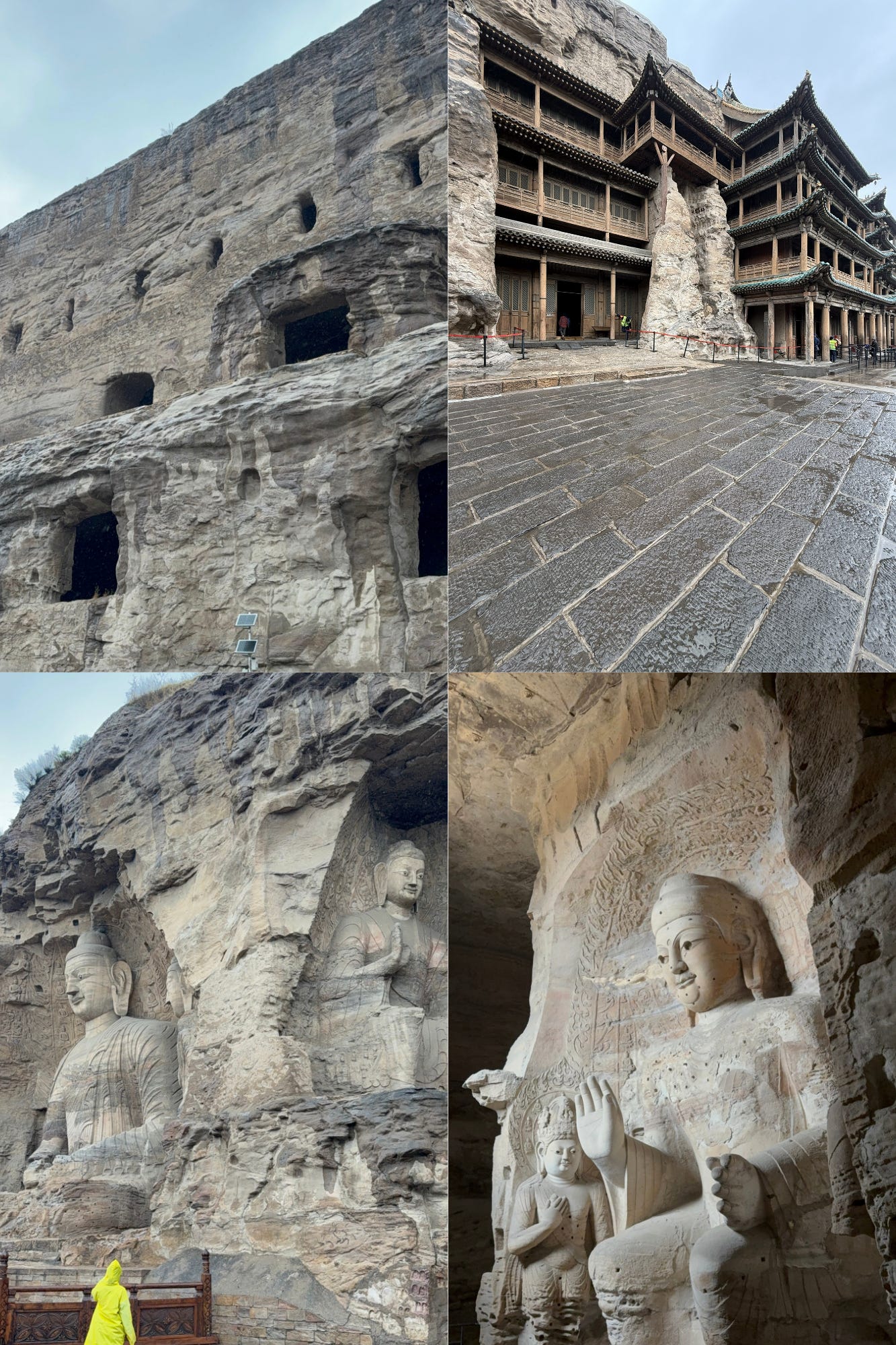
The path was almost submerged in water. I slalomed around puddles to come face to face with larger buddhas carved directly into the cliff face. Calming traditional music played on repeat throughout the site. As the rains continued to hammer down I decided to head back. My home stay was empty, no other guests had checked in, prolonging my unsociable time in China. At least there were beautiful views over the old fortress of Datong as distant fireworks popped in the night sky.
Pingyao’t of this world
(19 April 2025) Pingyao: There was a dusty haze around the city. It seemed small and unloved. However, the opposite could said of the ancient city in enveloped. A small middle aged woman led me upstairs. ‘This your room’ A padlock was the only thing holding the door closed. ‘Be quiet when in the room. Lady in room next door have baby last night’ She made an imaginary bulge over her stomach as she spoke. She ushered me to the bathroom. Noticing something needed fixing, she grabbed a chair from the corner and wrenched a leaver into a new position. ‘Shower should work now’. She handed me the padlock and key wondered off. My hostel was a short walk from the ancient city of Pingyao. It is a well preserved walled city in the Shanxi province. Cars flew down a chaotic road. Modern electric cars were rubbing shoulders with rustic three wheel tractors and old soviet looking trucks. There was no obvious pavement to walk to on the other side. Dust was being whirled around by the rushing traffic. Locals held their stares uncomfortably long. Not many westerners come this way it seems.
I entered the city through one of the six barbican gateways, stepping back in time as I did so. No cars were allowed past the ancient walls. However, golf carts full of elderly locals raced past. Pingyao has played a very important role in Chinese economic history. During the 19th century Pingyao served as the financial centre of the Qing Empire. It is home to the Rishengchang which was the first draft bank in China and the original predecessor to modern banks in the country. During its peak in the 19th century the Rishengchang controlled roughly half of the Chinese economy and had branches in most major cities throughout the country. The layout was similar to the Hutongs in Beijing. Narrow laneways interlaced between courtyards, creating a labyrinth of small communities. The market tower stood tall over the main drag. Tourist rushed past in their masses. The arms of selfie sticks flailed everywhere. I picked up a small bite to eat from a food stall. Simple meat skewers were pressed between bread. A chilli sauce was lumped in with it. I chased it down with another moon cake. In need of a walk, I wandered down to find the Rishengchang. It was strangely empty for such an important historic site in China. One bad translation read ‘…the market consults loans and silver money intercourse’.
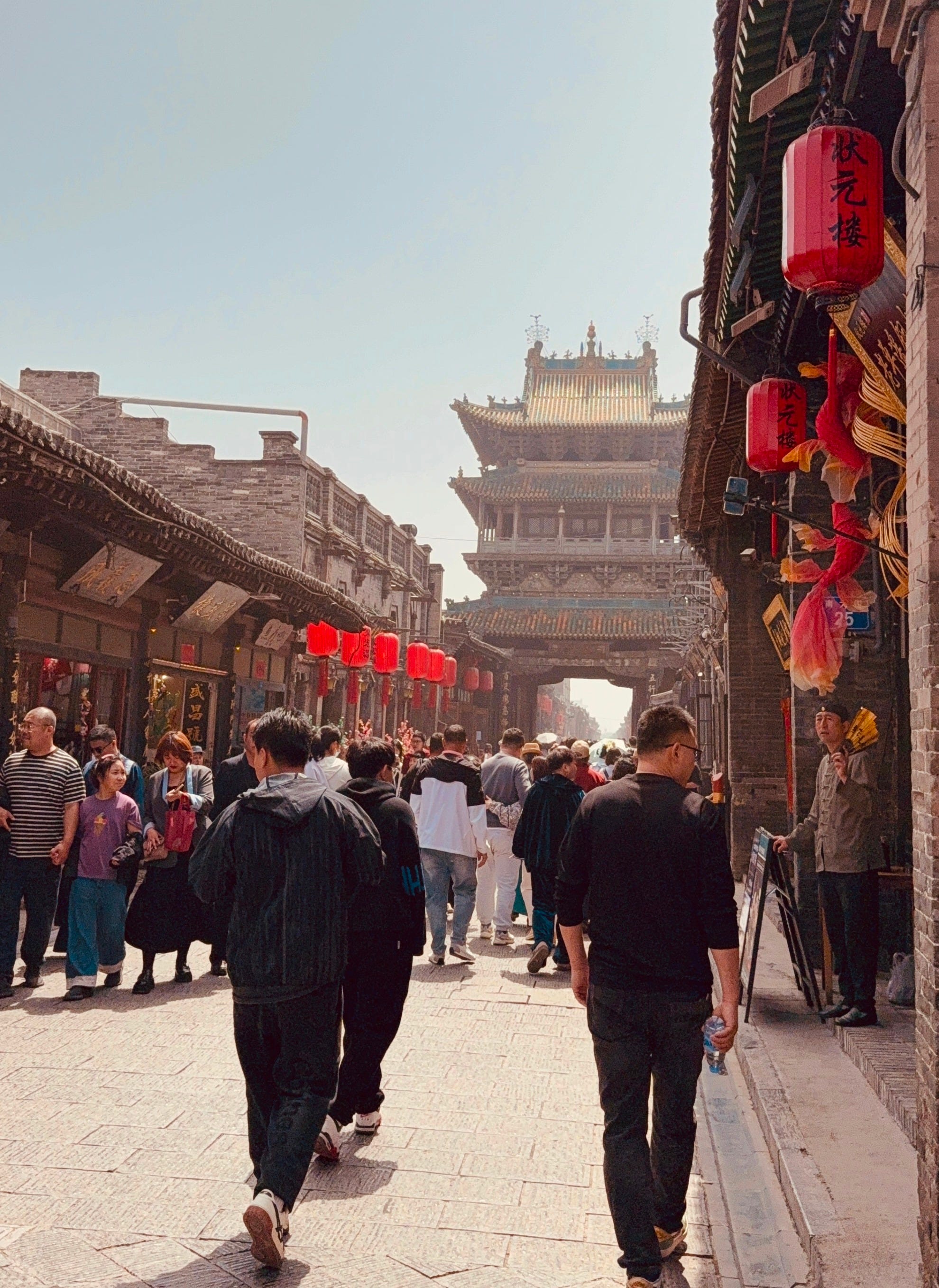
A waiter heckled me in English ‘ hey, you want food? come look at menu’. I was still hungry so I ventured in. It was a small restaurant, two backlit plastic menus clung to either side of room. Eight elderly Chinese tourists sat at the only other occupied table. They stared at me and held their gaze as if I was a wanted criminal. ‘Nihao’ I waved at them. Suddenly their emotionless cold stares erupted into beaming smiles. ‘Nihao, Nihao’ they gossiped with each other before gesturing to different menu items on the wall. I followed their recommendation not knowing what I ordered. They got up to leave but two hung back by my table ‘ urrrrrr… good.. urrr..bye’ one said ‘sank you, sank you’ said another, throwing any English words he knew at me. They laughed on their way out. I was brought a large bowl of stew, enough for two people. Any potential customers seemed more interested in looking at me than the menu. Like an animal in a zoo. A theme that continued all day.
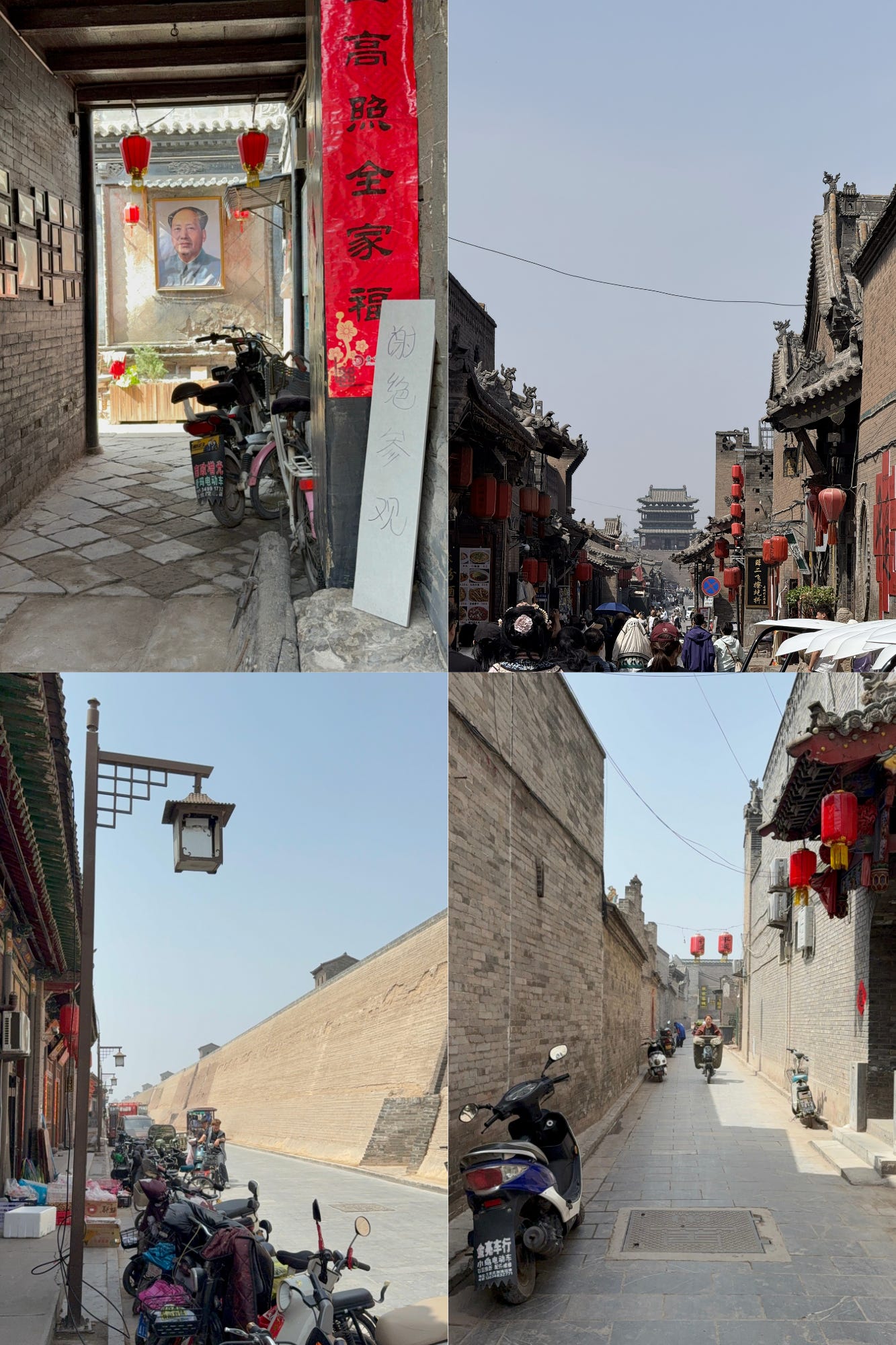
I climbed up to the top of the wall after my late lunch. The late afternoon sun was beating down. There no where to hide from the solar blaze. The views of the over town were spectacular. Classical Chinese architecture was in plain view. Sloped roofs filled the foreground in front, hiding the interwoven laneways. Drum towers and barbican gates could be seen in their purposeful positions. I wondered back to my hostel as the sun was setting. I was on the move yet again. This time to Xi’an.